
Device
The hardware, part by part.
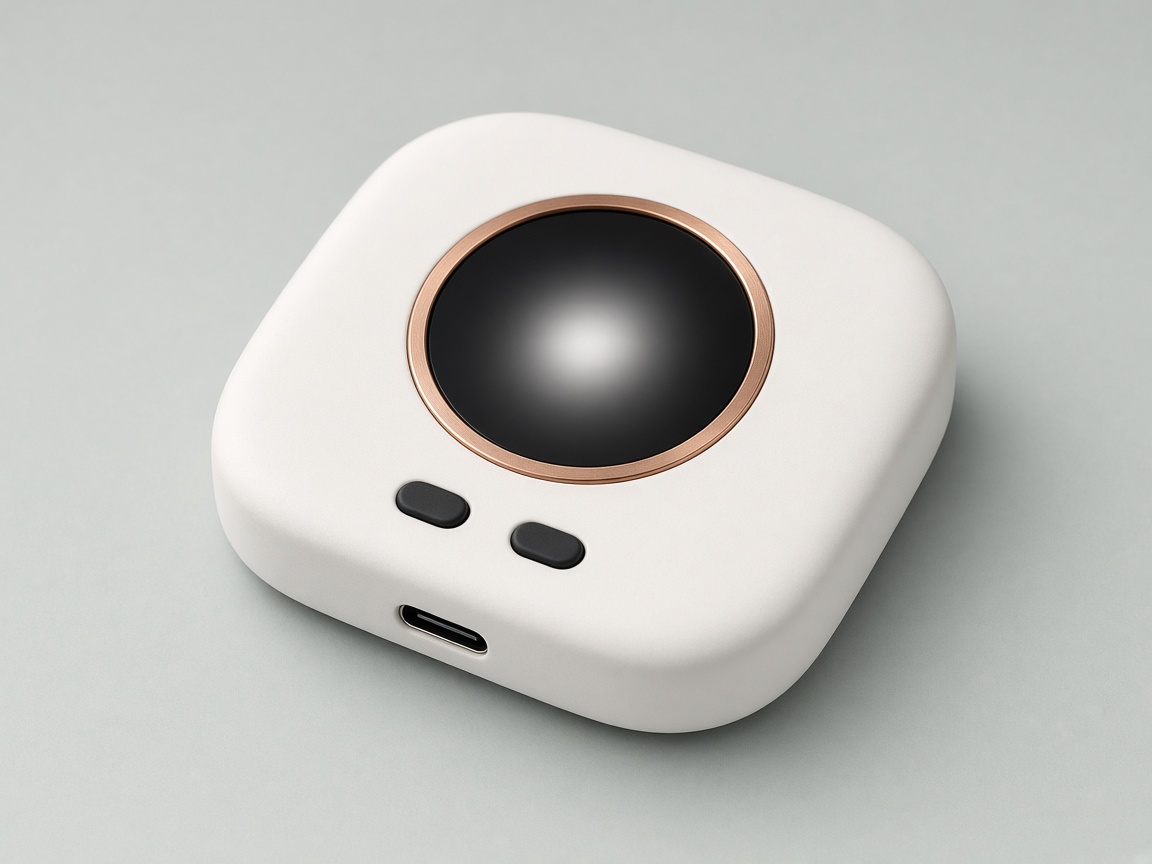
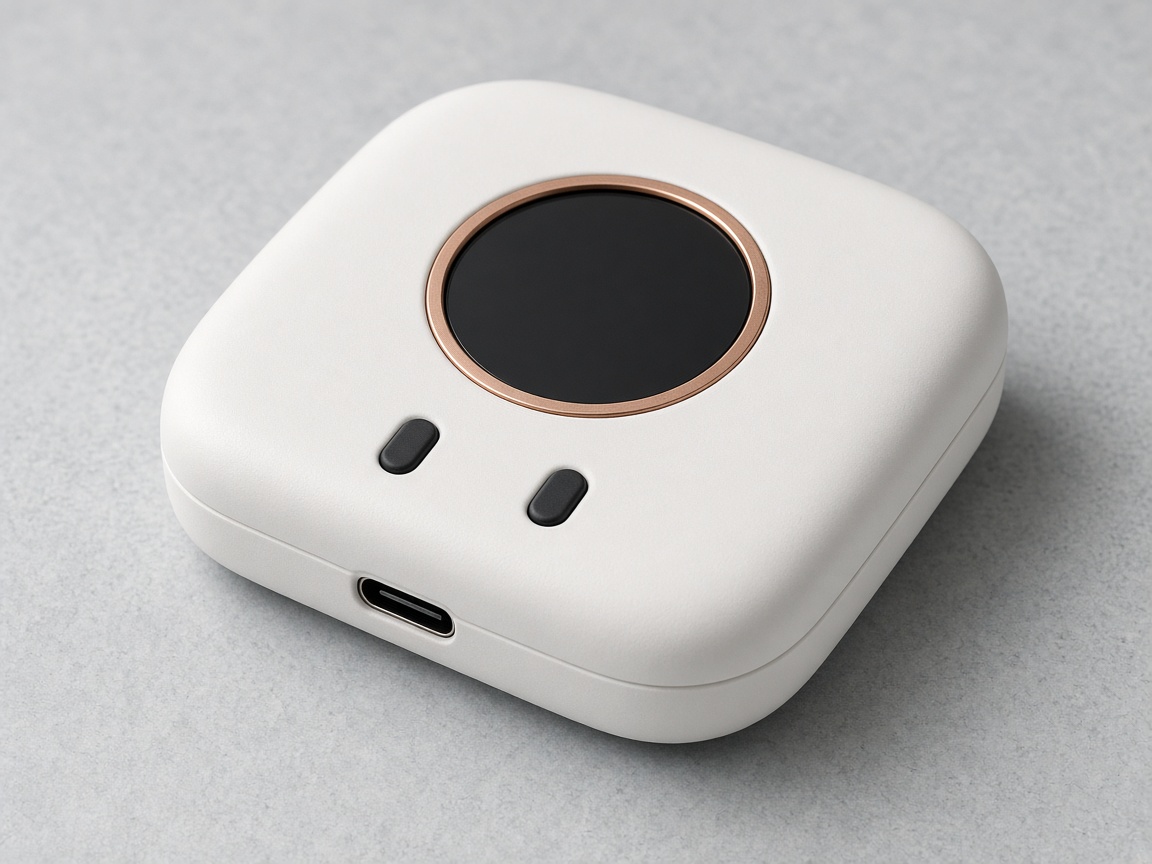
Novubase is one object. A ceramic body, a copper ring, a round screen, two buttons, and a USB-C port. The private key for cryptocurrency lives on the chip behind that glass.
What you hold
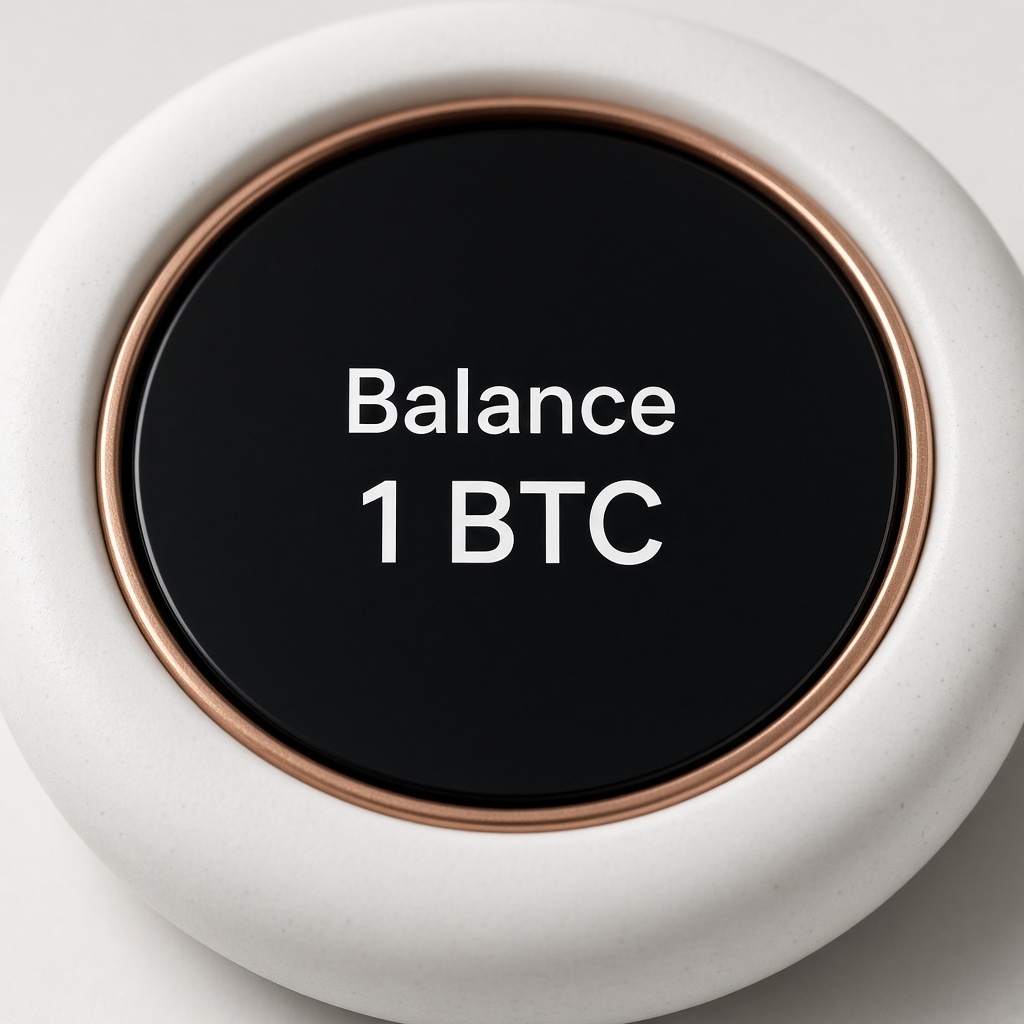
The body is a rounded square, about the size of a large coaster and thick enough to feel like an object rather than a card. The face is matte chalk ceramic. A thin copper ring frames the circular display. Two black buttons sit under the ring. The right one confirms. The left one declines.
USB-C is the only socket. It brings power and it carries the request from the reader on the computer. When the cable is out, the device is off. There is no cell, no battery door, and no wireless radio.
What the chip keeps
The security chip creates the private key during setup and keeps it. The reader on the computer can ask the chip to sign. It cannot ask the chip to export the key. A home view on the round screen can show a holding the chip already keeps, so you can see that the device is the place those keys live.
The same chip can derive keys for Bitcoin and for Ethereum, and for networks that follow those published key paths. The screen shows the request that belongs to the path in front of you.
What setup looks like
The first time the cable connects, the chip creates the key and the screen shows 24 words, once. You write them on paper. After that, the words are not shown again unless you deliberately open the recovery check on the device itself. A photograph of the screen is a copy. The paper in your own hand is the record Novubase is designed around.
If the device is lost, those 24 words restore the key onto a replacement Novubase. Keep the paper away from the device and away from cloud notes. The company will never ask you to type the words into a website or read them over the phone.
The security model explains each of these choices. Questions about the object itself sit on the questions page.